
how we work
We know that a better future cannot be built with academic knowledge alone. That’s why we place happiness at the heart of the learning process. For Kuará, educating for happiness means helping our children develop self-confidence and emotional skills to build balanced relationships and deal with the challenges of life in society.
Guided by this purpose, we work daily with four pillars that we consider fundamental for innovative and transformative education:
EMOTIONAL EDUCATION


Good mental health is essential for learning. At Kuará, emotional education is not a subject but a way of relating to children in everything we do. Emotionally educating a child requires understanding their needs and abilities, knowing how to listen to them, and teaching them to recognize, name, and express their emotions. This strengthens emotional intelligence, self-confidence, and develops skills for decision-making and conflict resolution.
HANDS-ON SELF-DIRECTED LEARNING


Our children lead the learning process (learning to learn), developing ideas, solutions, and arguments, always getting hands-on in situations connected to real life! The educator moves from the uninteresting and monotonous method of content transmission to the role of mediator, guide, and support for the learners. In self-directed learning, teaching is personalized, respecting each child's interests, forms, and learning paces of. In this process, children become enchanted with learning, learn more and better, and develop skills such as responsibility, independence, proactivity, cooperation, leadership, and ethics, in addition to increasing motivation and strengthening the learner's confidence in their own ability to learn.
FREE PLAY


Free play is essential for the healthy development of children, as it allows exploration and stimulates imagination and social, physical, motor, and intellectual development. Through free play, the child experiences human culture and understands themselves and their surroundings.
CONTACT WITH NATURE


So often neglected by concrete schools and replaced by screen time, contact with nature is essential for children's and adolescents' well-being and health, as it positively affects all markers of a healthy childhood: it calms and regulates emotions, improves learning capacity, immunity, sleep quality, memory, sociability, and physical fitness, in addition to stimulating ecological awareness and preservation of the natural world.
WHO INSPIRES US
We acknowledge and thank here some (of the many) pedagogies, schools, educators, and theoretical foundations that inspire us:

educação viva e consciente
IVANA JAUREGUI

REGGIO EMILIA

MARIA MONTESSORI


.png)

EMMI
PIKLER
TIÃO
ROCHA
LAURA GUTMAN
antonio
damásio

EDUCAÇÃO
POSITIVA

BELL
HOOKS

FRANCISCO MORA
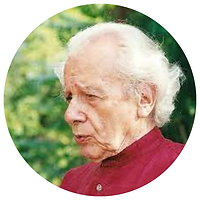
PIERRE
WEIL

DANIEL SIEGEL

GABOR
maté

CRIAÇÃO
neuro-compatÍVEL
